Zichtbaar Dash
The dashboard my studio’s clients use to manage their site, shop, bookings and messages themselves. On the web and as an app.
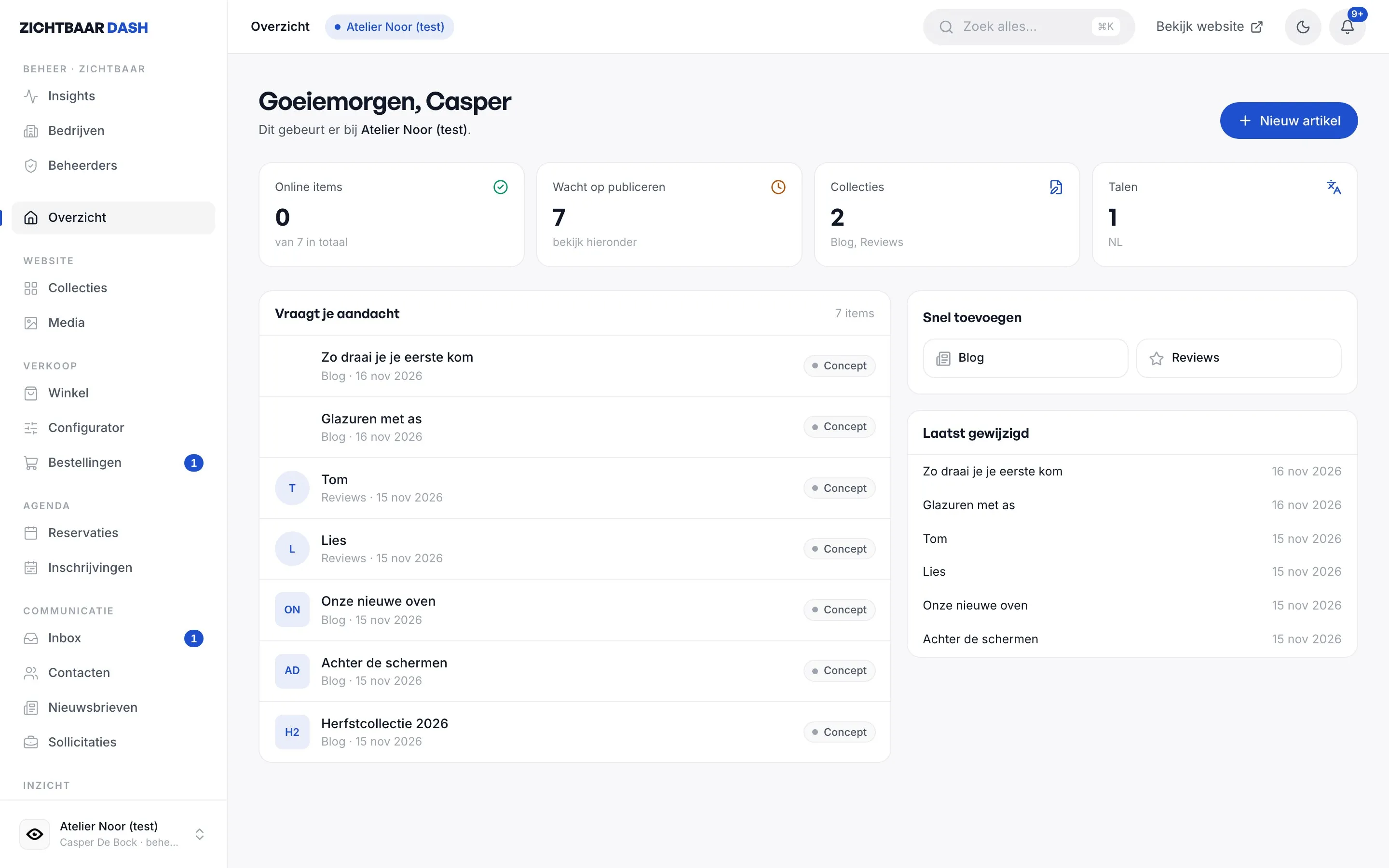
Zichtbaar Dash is the product behind my studio. I designed it, built it and keep it running.
What it is
One platform behind all of my studio’s client sites. A client logs in and edits their own text, images, products and opening hours. The site fetches that content through the API.
Modules
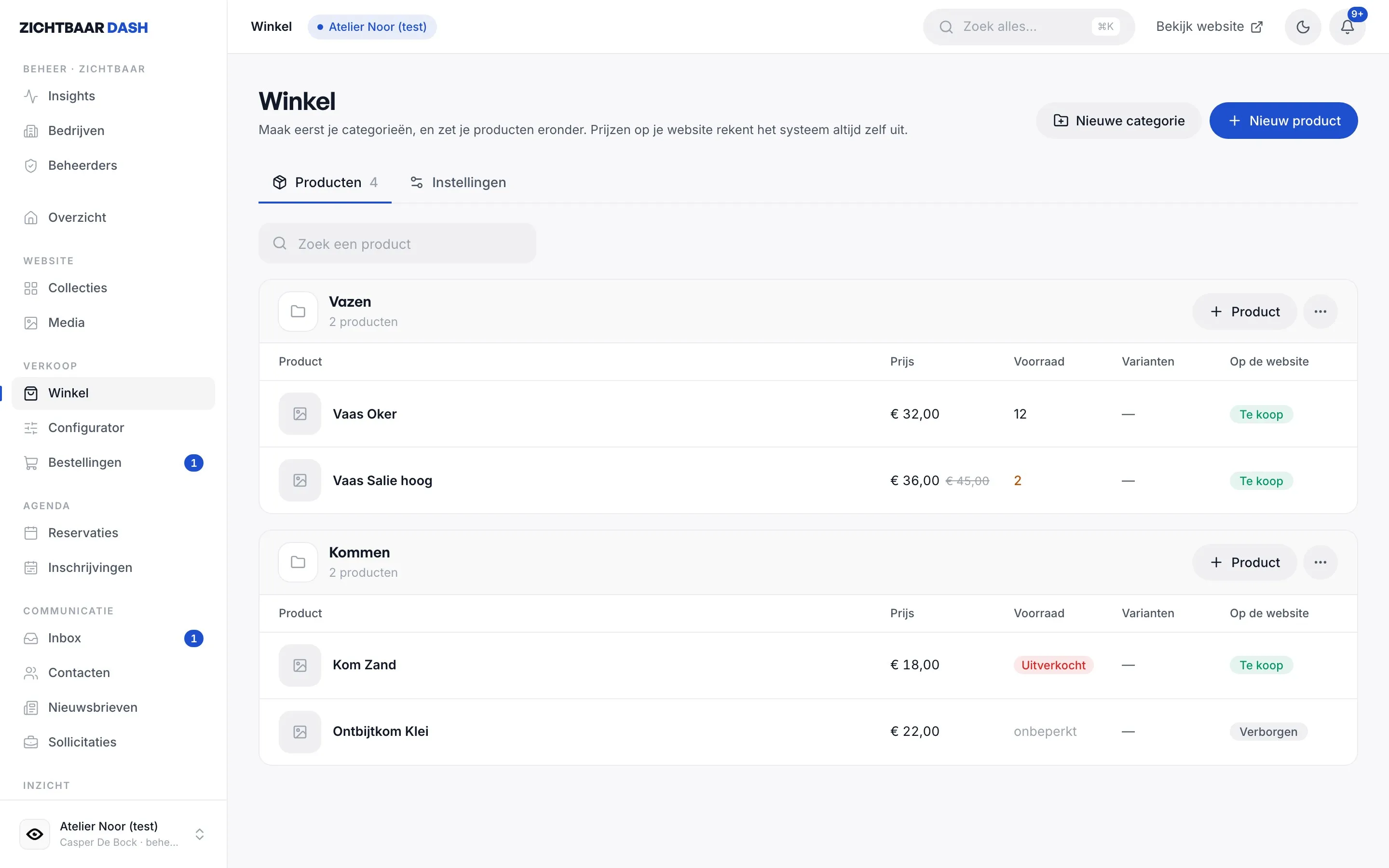
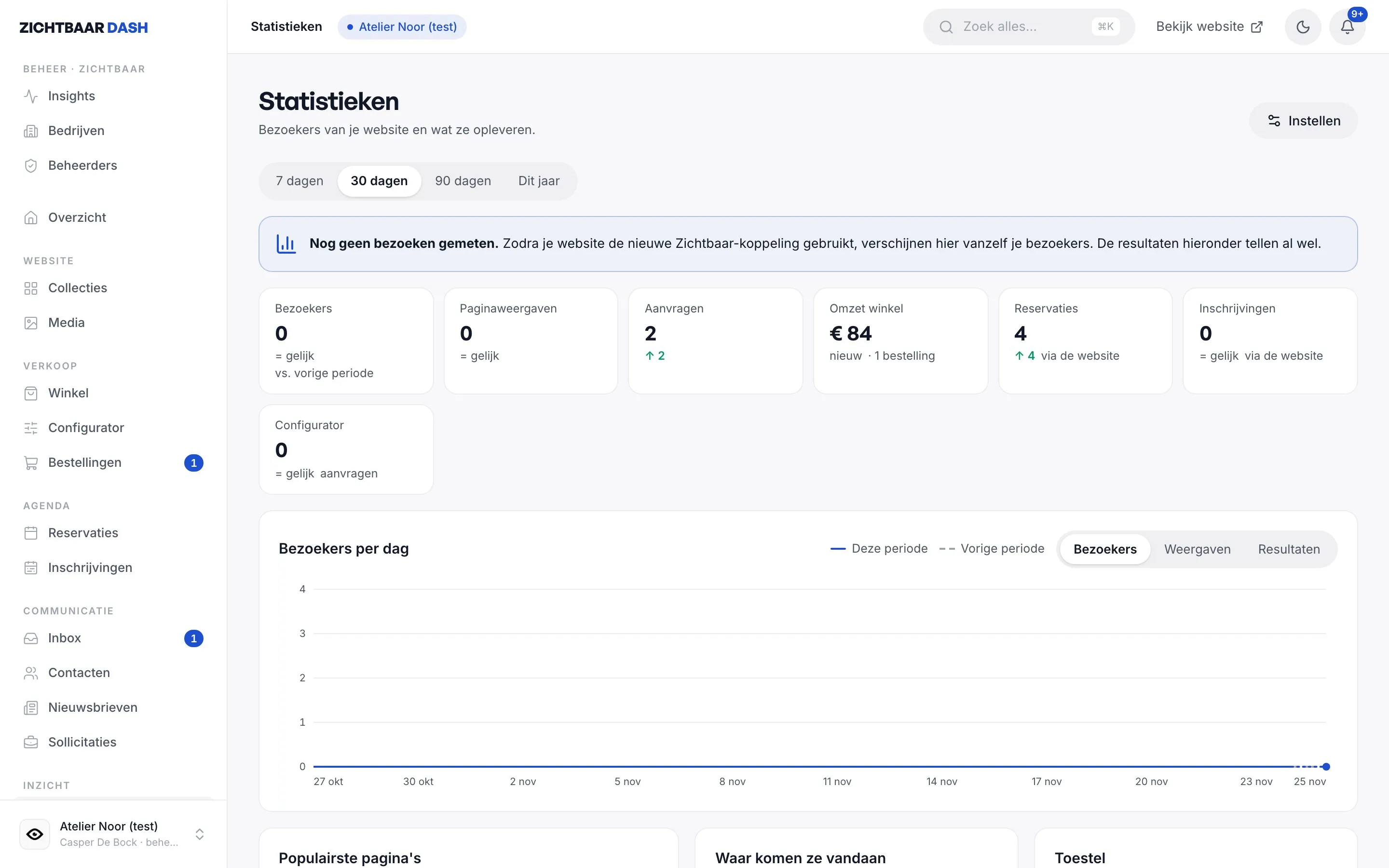
Collections and media for the website. Shop, configurator and orders for sales. Bookings and registrations for the calendar. Inbox, contacts, newsletters and job applications for communication. Statistics for the overview. Each company only gets the modules it uses.
Apps
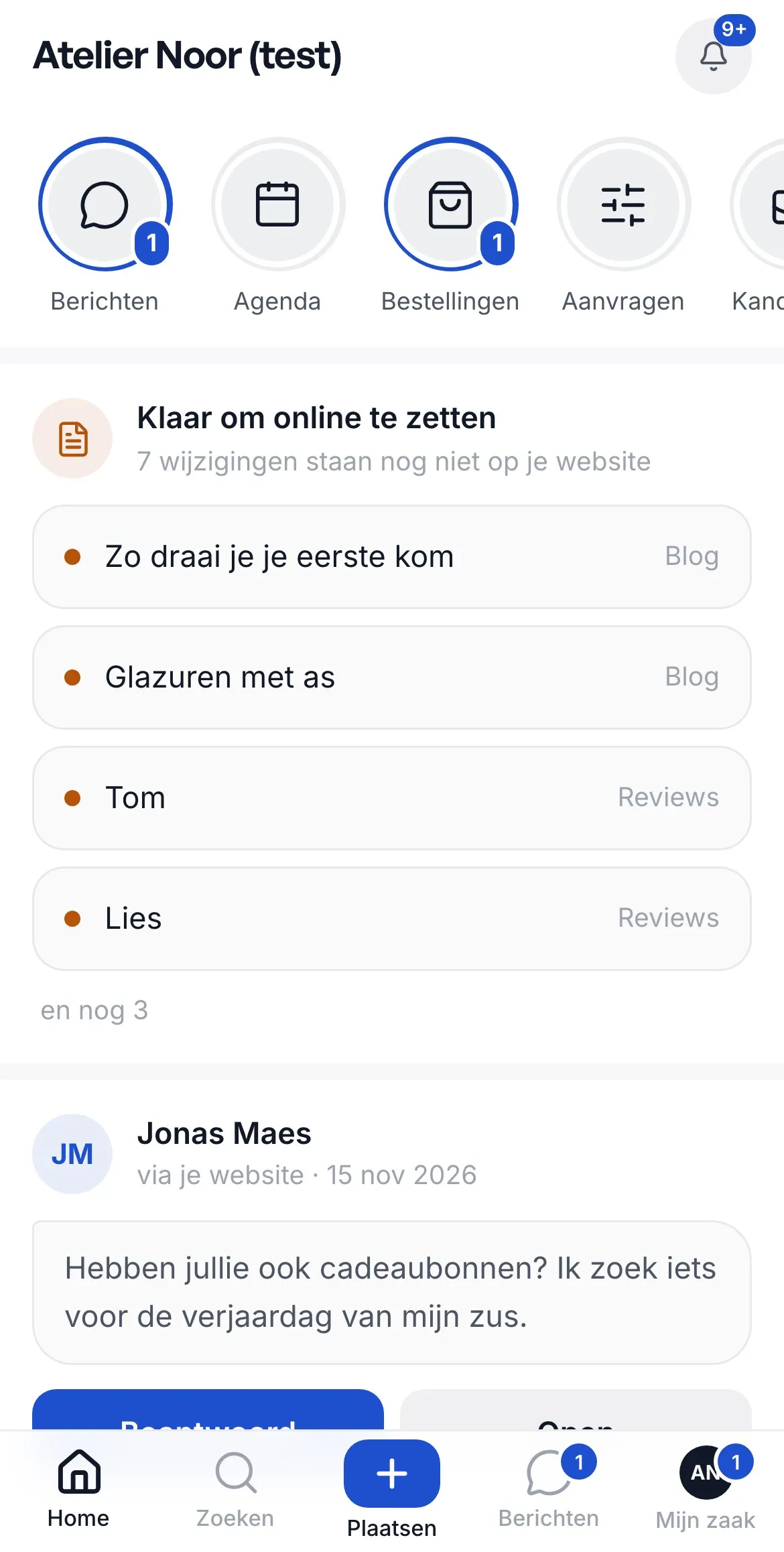
The same dashboard exists as an iOS and Android app, built from the same code with Capacitor. On a phone it gets its own layout with a tab bar at the bottom, and new messages and orders arrive as push notifications.
A CMS from a schema
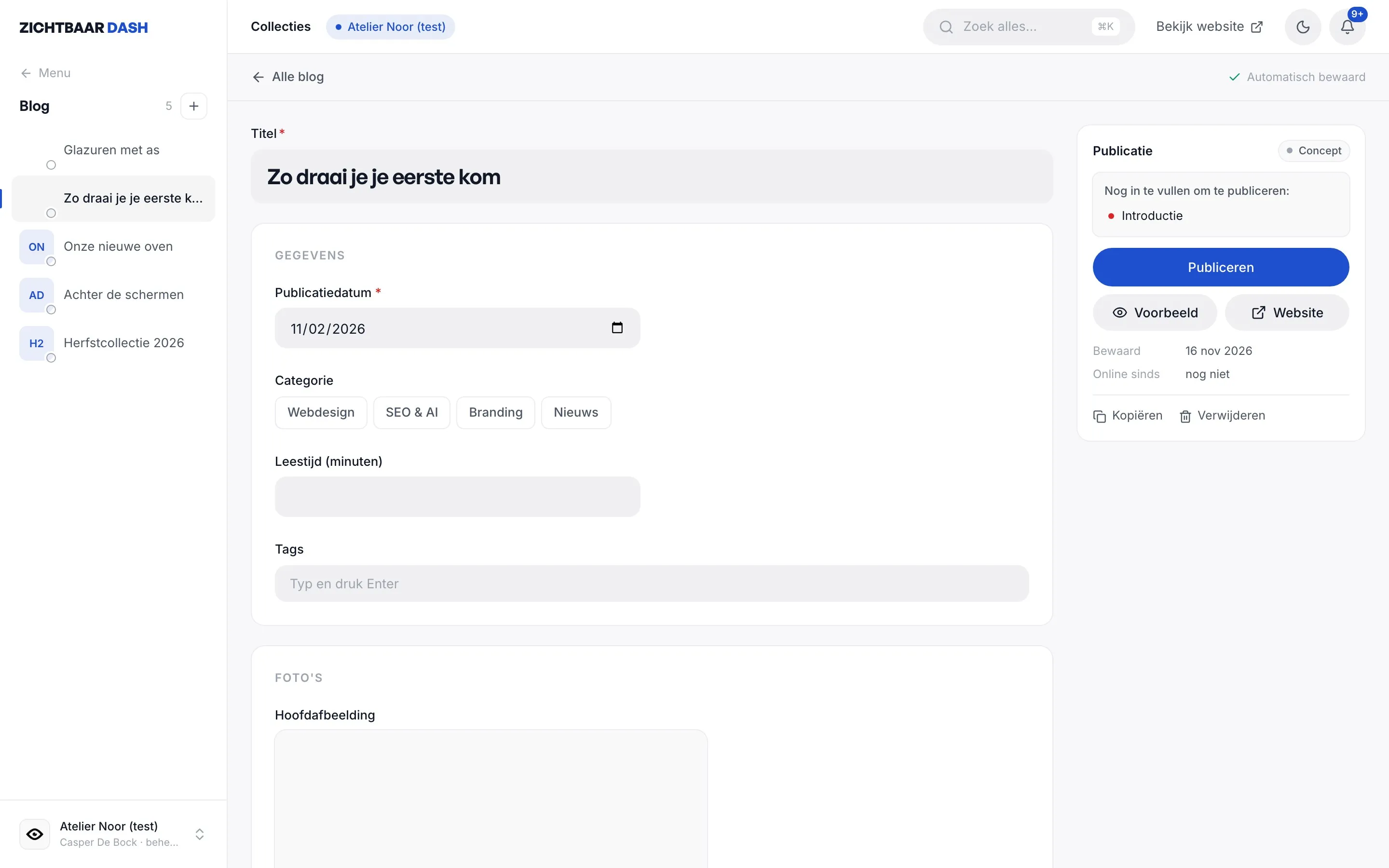
Every collection has a schema with 19 kinds of fields. The dashboard builds its forms from that schema, and the API checks the content with the same validator. A schema change that would break existing content is flagged first. Every publication is kept as a version.
Security
Every API route has a test that tries to call it from another company; if a route is added without such a test, the test suite fails. The session lives in an httpOnly cookie and the server only stores a hash of the token. There are roles per company and an audit log of who did what.
AI
Client sites can show a chat assistant that answers questions using the content of the site itself. The dashboard translates content into other languages. Costs are tracked per company.
From the old version to the new
A migration tool of my own derives the schemas from the existing data of the previous version. Across 18 companies and 592 fields it produced zero errors.
Monitoring
A separate monitor checks the API every minute and every site every five minutes, and sends a notification to my phone after two failed checks.
Stack
Dashboard
React 19, Vite, TanStack Query, TypeScript
Apps
Capacitor, iOS, Android, APNs, Web push
API
Node 22, Hono, Zod, Drizzle
Data
MySQL 8, S3
AI
Claude API, SSE
Infra
Docker, AWS EC2, RDS, SES, Render, Cloudflare
Monorepo
pnpm, Turborepo, Vitest
How it works
- 679 tests; every route has a tenant isolation test
- 57 tables, 277 API routes, 35 migrations
- One codebase for web, iOS and Android
- CMS with 19 field types, forms generated from the schema
- 7 packages and 3 apps in one monorepo
- Monitor watches 29 sites and APIs